
There are back casting room in the world that almost no one notices, yet almost everything passes through them. They are transitional spaces—backstage corridors, production vans, editing basements, and writers’ rooms scattered with energy drinks and half-erased whiteboard scribbles. Among these hidden chambers lies one of the most mysterious and misunderstood corners of the entertainment machine: the casting room.
Actors, fans, and even veteran industry workers often speak of it with a mixture of reverence and dread. It is a place where careers begin or end, where minutes can shape destinies, and where creativity is both spontaneous and ruthlessly judged.
Yet there is a lesser-known, more intimate, and far more influential version of that space. It goes by different names depending on the studio—the secondary room, the support studio, the rehearsal chamber—but insiders quietly call it the Back Casting Room. And within those walls, the Chronicles begin.
What Exactly Is the Back Casting Room
Officially, it is a supplementary space—an overflow room used when the main casting studio is booked, crowded, or too public. But unofficially, it has become a crucible for experimentation, a sanctuary for discovery, and sometimes, a refuge for the overlooked.
While the main casting hall sees polished performances, memorized lines, and meticulously curated first impressions, the Back Casting Room is where the real work is often done. Here:
actors loosen their nerves,
directors test half-formed ideas,
dialogue is rewritten minutes before auditions,
and creative chaos flows with startling honesty.
Think of it as the entertainment industry’s laboratory.
Not every story that matters is glamorous. Many of the breakthroughs, meltdowns, and pivotal decisions occur behind the soundproofed door labeled with nothing more than a laminated “Studio B.”
The Atmosphere: A World Between Worlds
Walking into the Back Casting Room feels like stepping into a liminal space. It is both part of the studio and separate from it—familiar yet slightly out of phase with the rest of the building.
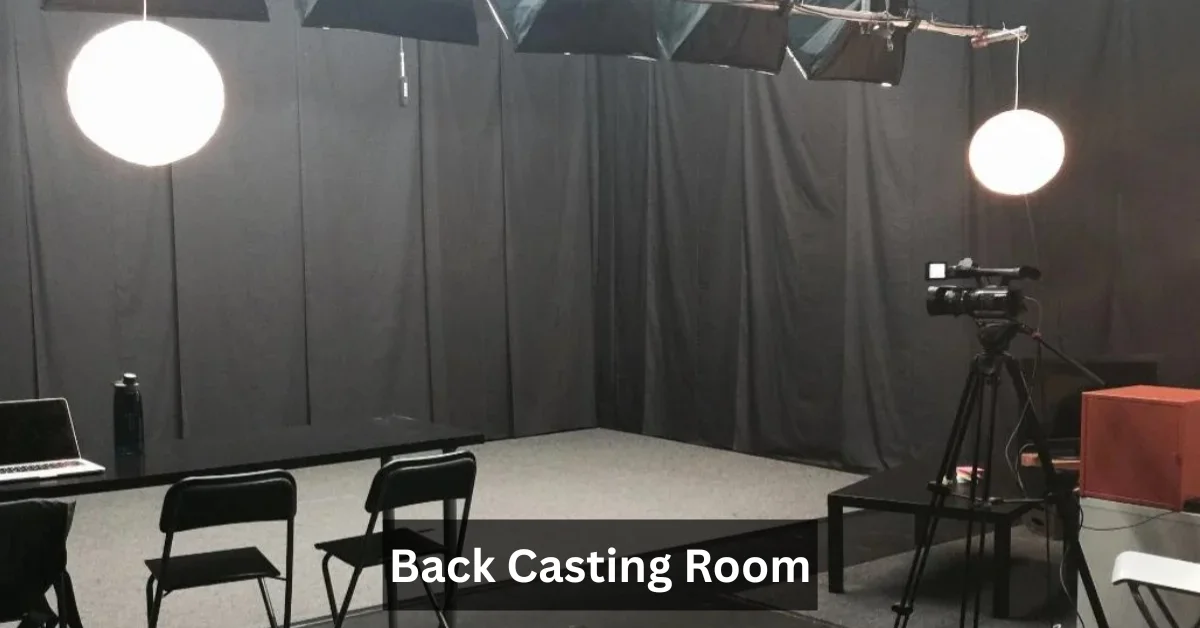
The room typically contains:
a shaky folding table scattered with pens without caps,
two mismatched chairs (no one knows where the second one came from),
a ring light taped together more times than replaced,
walls with acoustic foam peeling like sunburned skin,
and a mounted camera that may or may not record when it claims to.
Despite this unassuming décor, the energy inside often feels electrically charged. Actors walk in sweaty-palmed and hopeful, gripping monologues like lifelines. Casting assistants shuffle schedules, offer quick pep talks, and juggle the emotional complexity of dealing with hundreds of personalities in a single day.
Here, time is strange. Minutes stretch when an actor freezes on their lines, yet they accelerate violently when someone delivers a performance so gripping that nobody breathes until the final syllable drops.
The Back Casting Room is a paradox: ordinary in appearance, extraordinary in purpose.
The People Who Shape the Chronicles
The Aspiring Actor
Some arrive polished, wearing fitted blazers or carrying oversized tote bags full of props they may or may not be allowed to use. Others appear almost invisible at first glance—quiet, soft-spoken, unsure—but then come alive when the camera rolls.
In the Back Casting Room, hierarchy dissolves. Every actor’s chance is as pure as the moment they step onto the taped “X” on the floor.
The Casting Assistant
Often underpaid, always overloaded, these are the unsung heroes of the creative world. They.
coach nervous participants,
run last-minute scene partners,
fix the lights while reading emails,
track dozens of names, faces, and voices every hour,
and serve as the first line of emotional triage.
They are the gatekeepers to the gatekeepers.
The Director or Producer
Not always present physically, but when they are, the air changes instantly. Their silence during an audition can feel like a verdict. Their raised eyebrow can send the entire room into a spiral of interpretation.
But many directors visit the Back Casting Room specifically to see something rawer, less polished—something real.
The Room Itself
A character in its own right.
Its history accumulates with every sigh, every tear, every whispered line rehearsal. The walls absorb the hopes of thousands. If creativity leaves fingerprints, then this room is coated in them.
The Rituals and Rhythms of Casting Culture
The Warm-Up
Before the camera turns on, actors often mumble lines, shake their hands vigorously, or do strange facial exercises. These are not quirks—they are survival tactics.
In the Back Casting Room, there is no judgment. Everyone understands the instinct to prepare for battle.
The Moment Before
There is an unmistakable pause before the first line of the audition. The actor breathes, the assistant hits the red button, and suddenly, the air becomes sharp and anticipatory.
This moment is the heartbeat of the room.
The Reset
A missed line.
A nervous laugh.
A plea to “try that again, just once more.”
Here, failure doesn’t end the audition. It is folded into the process.
The Goodbye
Sometimes a handshake. Sometimes a “Thank you, we’ll be in touch,” which actors decode like cryptographers.
And sometimes, there is an unmistakable electricity—a sense that something extraordinary just happened.
Legendary Moments: Stories That Echo Behind the Door
Over the years, countless stories have seeped out of the Back Casting Room—some whispered, others mythologized.
The Shaking Voice That Became Iconic
An actor trembling with nerves delivered the quietest audition anyone had ever heard. The assistant leaned in, trying to understand the soft-spoken lines. But the director, watching from the monitor, saw something different:
Authenticity.
The role went to the actor. The performance later became one of the most emotionally powerful scenes in the film.
The Unexpected Rewrite
Five minutes before an audition, a script supervisor barged in with fresh pages. The actor blinked down at the unfamiliar dialogue, panicked. But the director decided to test improvisation instead, and what followed was so natural, it reshaped the entire character arc.
The Comedy Accident
A chair broke during a comedic scene—unexpected, unrehearsed, and spectacularly timed. Instead of stopping, the actor built the mistake into their performance, sending the room into hysterical laughter. By the end, the director’s eyes were watering, and the actor had effectively won the role.
These stories form the unwritten folklore of the room—moments of human unpredictability that redefine projects.
Pressure, Vulnerability, and the Emotional Price of the Room
To outsiders, casting looks simple: actors perform, casting teams choose, films get made.
But inside the Back Casting Room, the process is rawer, more emotional, and psychologically complex than most imagine.
The Emotional Toll on Actors
Actors rarely admit how emotionally taxing the room can be. Every audition is a mixture of self-promotion, vulnerability, and hope. In mere minutes, they expose themselves to critique, uncertainty, and rejection.
But the Back Casting Room softens the edges. It allows mistakes. It encourages second takes. It gives space—however small—for authenticity.
The Weight on Casting Teams
Casting assistants and directors are responsible for decisions that can alter lives. They may see hundreds of auditions per week. The responsibility can be overwhelming, especially when two actors are brilliant in completely different ways.
In this room, judgment is not mechanical. It is human, fallible, intuitive—and often emotionally heavy.
Why the Back Casting Room Matters More Than Ever
In an era shaped by digital self-tapes, online auditions, and AI-assisted pre-screenings, one might assume that physical casting rooms are becoming obsolete. But the Back Casting Room remains more essential than ever.
Authenticity Lives Here
Digital submissions can be over-edited, over-produced, or overly coached. But in the room—this room—authenticity becomes visible. Raw talent reveals itself.
Creative Chemistry Emerges in Person
Casting is rarely about finding a single actor. It’s about finding a combination of personalities that electrify the narrative. Chemistry is a living, breathing phenomenon, and the Back Casting Room is where sparks become fire.
Improvisation Thrives
Directors can throw curveball prompts. Writers can tweak lines mid-reading. Actors can experiment fearlessly. These unpredictable interactions often lead to breakthrough performances.
Human Connection Matters
Storytelling is a fundamentally human art. And humans thrive on presence—on shared space, eye contact, tone, and instinct. The Back Casting Room fosters these connections in ways no digital platform can replicate.
The Myth vs. The Reality
Popular culture often romanticizes casting rooms with images of dramatic monologues, instant discoveries, and cinematic glory. The truth is messier—and far more beautiful.
The Myth
The perfect actor walks in, delivers a flawless performance, and instantly secures the role.
The Reality
The Back Casting Room Chronicles show a much different process:
roles evolve based on auditions,
scripts change after witnessing unexpected talent,
casting choices are debated for hours,
and sometimes, the least polished audition holds the deepest impact.
Greatness in storytelling is rarely linear. It is born from trial, error, instinct, and the willingness to see potential where others overlook it.
Lessons from the Back Casting Room
Across decades and thousands of stories, the Back Casting Room offers lessons far beyond filmmaking.
Imperfection Is Often More Interesting Than Perfection
Some of the most memorable auditions include stumbles, glitches, or improvised recoveries. Human flaws carry emotional resonance.
Small Rooms Can Lead to Big Breaks
You don’t need ideal conditions to create something meaningful. Sometimes a cramped studio with flickering fluorescents becomes the birthplace of greatness.
Creativity Thrives Under Pressure
Deadlines, nerves, surprise rewrites—all of these spark creativity, not stifle it. The Back Casting Room proves that constraints often generate the most innovation.
Hidden Work Matters
The world sees the final film, not the endless hours of testing, adjusting, and experimenting behind the scenes. But the hidden work is where excellence is forged.
Everyone Deserves Their Moment
Even if it’s five minutes long, even if the camera is crooked, even if the room smells faintly of coffee and stress—every audition is a chance for someone to show the world who they truly are.
Conclusion
The Back Casting Room is more than a physical space. It is a symbol of possibility—an arena where ambition collides with opportunity, where fear and courage coexist, and where the future of storytelling quietly takes shape.
Every day, new actors walk through its door, some trembling, some determined, all hoping to leave a mark. Casting assistants juggle chaos with compassion. Directors search for that indescribable spark. And the room itself, with its peeling foam and mismatched chairs, continues to collect stories like dust motes in sunlight.
These are the Back Casting Room Chronicles:
the laughter, the tears, the surprising triumphs, the whispered doubts, and the unforgettable moments that will never make it to the screen—but without which no screen would ever shine.