
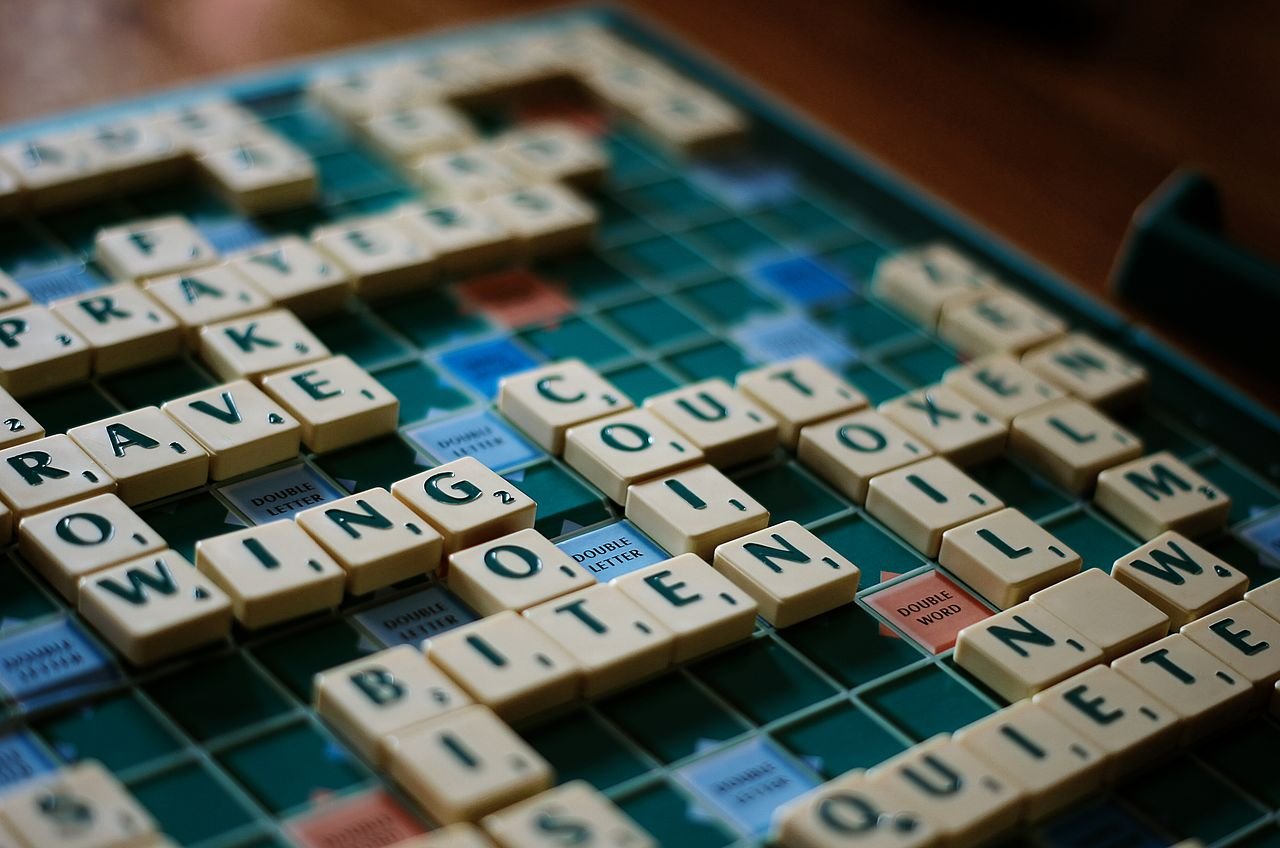
There is a moment in every serious word game where time slows down. Your rack is full, the board is tight, and every possible move seems to collapse into doubt. You can almost hear the clock ticking—not just the physical timer, but the quiet pressure of knowing that one wrong placement could cost you the game. In that moment, Scrabble stops being a casual pastime and becomes something closer to strategy, memory, and nerve.
When every tile counts, guesswork is a luxury you can’t afford.
This is where AllScrabbleWords earns its reputation—not as a crutch for lazy players, but as a precision instrument for those who understand that Scrabble is a game of margins. One point. One letter. One obscure plural or two-letter word can decide the outcome. And in a game where knowledge is power, accuracy is everything.
Scrabble Is Not Just a Vocabulary Game
At first glance, Scrabble looks like a test of how many big words you know. Beginners chase seven-letter monsters and feel triumphant when they land one across a triple-word score. But experienced players know better. Scrabble is not about knowing more words—it’s about knowing the right words at the right time.
The highest-level games are often decided by words most people have never heard spoken aloud. Short words. Awkward words. Words that look unfinished or wrong until you see them validated by the official dictionary. These words don’t show up in novels or conversation, but they dominate championship boards.
This is where many players falter. They hesitate. They second-guess. They avoid a perfectly legal move because they’re “not sure it’s a real word.” That hesitation costs points, tempo, and sometimes the entire game.
AllScrabbleWords exists to eliminate that hesitation.
The Tyranny of Uncertainty
Uncertainty is the silent killer of strong Scrabble play. It doesn’t just stop you from making bold moves—it subtly reshapes your strategy. You play safer than you should. You hold onto tiles too long. You miss hooks, overlaps, and defensive placements because you’re unsure whether a word will stand.
In competitive Scrabble, confidence is not bravado; it’s accuracy. Confidence comes from knowing that when you place a word on the board, it is valid—no arguments, no challenges, no wasted turns.
AllScrabbleWords provides that certainty. It is not about inflating your ego with rare words; it is about grounding your decisions in verified, comprehensive word lists. When you consult it, you’re not guessing—you’re confirming.
And that changes everything.
Every Tile Has a Job
In casual play, tiles are often treated emotionally. Players love their high-value letters and resent the awkward ones. Q is either a jackpot or a curse. V and W feel heavy. I’s feel useless. This mindset leads to inefficient play.
In reality, every tile has a job.
Low-point letters are glue. They extend words, create parallel plays, and open scoring lanes. High-point letters are weapons—but only if deployed with care. The most successful Scrabble players don’t fall in love with letters; they assign them roles.
AllScrabbleWords helps players see tiles not as burdens or blessings, but as tools. By revealing the full range of words each letter can participate in, it expands your tactical options. Suddenly, a rack that looked dead becomes playable. Suddenly, that leftover vowel finds purpose.
When every tile counts, understanding how each one can be used is as important as knowing what it’s worth.
The Power of Short Words
Ask a novice what the most important words in Scrabble are, and they’ll probably name long ones. Ask a tournament player, and they’ll name two-letter words.
Two-letter words are the backbone of advanced Scrabble strategy. They let you score in tight spaces, create multiple words in a single turn, and control the board’s geometry. They are the difference between reacting to the game and shaping it.
But two-letter words are also the easiest to forget and the hardest to trust. Many look implausible. Some feel like abbreviations. Others seem like mistakes.
AllScrabbleWords removes the guesswork. It doesn’t just list these words—it contextualizes them within the official lexicon. When you know exactly which short words are valid, you stop fearing challenges and start exploiting opportunities.
The board opens up. The game accelerates. Your opponent feels the pressure.
Knowledge as a Competitive Edge
There is an uncomfortable truth about Scrabble that casual players don’t always want to admit: skill gaps matter. A player who knows the dictionary will consistently outperform one who relies on intuition alone.
This isn’t cheating. It’s preparation.
Chess players memorize openings. Poker players study odds. Athletes review footage. Scrabble players learn words. AllScrabbleWords is part of that preparation ecosystem—a reference that rewards discipline and curiosity.
Importantly, it doesn’t replace thinking. It enhances it. The best players don’t blindly copy word lists; they internalize patterns. They learn how words form, how letters interact, how suffixes and prefixes unlock new possibilities.
AllScrabbleWords accelerates that learning curve by providing clarity. Instead of wondering whether something might be a word, you can focus on how to use it strategically.
Defense Is Also Vocabulary
Scrabble is not only about scoring points—it’s about denying them. A strong defensive move can be just as valuable as a high-scoring one, especially late in the game.
Defense requires awareness of what words your opponent might play. It requires the ability to block premium squares, close lanes, and force inefficient racks. To do that effectively, you need to understand not just your own vocabulary, but the full scope of legal plays.
AllScrabbleWords gives you that wider view. By knowing what can be played, you can anticipate threats instead of reacting to them. You stop being surprised by obscure hooks and parallel plays. You see the board the way experienced players do: as a network of possibilities, not just a grid of letters.
When every tile counts, prevention is as important as ambition.
The Emotional Side of Precision
There is also a psychological benefit to certainty. Scrabble can be mentally exhausting, especially in long games or tournaments. Doubt drains energy. Second-guessing slows you down and fractures focus.
Using a trusted reference like AllScrabbleWords reduces that cognitive load. It allows you to commit to decisions with confidence. That confidence carries over into posture, pacing, and presence at the table.
Opponents notice when you play decisively. They sense when you are comfortable in the word space. Even without saying a word, you communicate that you know what you’re doing.
In competitive environments, that matters.
Learning Without Losing the Joy
One fear some players have is that studying word lists will make the game feel mechanical or joyless. That the magic of discovery will be replaced by rote memorization.
In practice, the opposite is often true.
Understanding the language of Scrabble deepens appreciation for the game. You begin to see elegance in small plays, creativity in tight spots, and beauty in efficiency. The joy shifts from surprise to mastery.
AllScrabbleWords supports this transition by being a tool, not a dictator. It doesn’t tell you what to play; it gives you the knowledge to decide. The game remains yours—your style, your instincts, your risks.
But now those instincts are informed.
Fair Play and Transparency
In an era where digital tools blur the line between assistance and automation, trust matters. Players want to know that the resources they use are legitimate, accurate, and aligned with official rules.
AllScrabbleWords is trusted because it prioritizes correctness. It respects the official word lists used in competitive play and presents information transparently. There are no gimmicks, no inflated claims—just words, verified and organized.
That reliability is crucial. When you base your strategy on bad data, you lose. When you base it on solid reference material, you build consistency.
When every tile counts, trust is not optional.
From Casual Games to Competitive Play
Not every Scrabble player aspires to tournaments, but every player enjoys winning. Whether you’re playing with friends, family, or online opponents, improvement feels good. It keeps the game fresh.
AllScrabbleWords meets players where they are. Beginners use it to confirm simple words and learn the basics. Intermediate players use it to expand their short-word knowledge and refine rack management. Advanced players use it to polish edges and eliminate blind spots.
The tool grows with you, not against you.
Tiles, Time, and Respect for the Game
Scrabble has endured for decades because it balances chance and skill, creativity and discipline. Tiles are random, but how you use them is not. Respecting the game means respecting its language.
AllScrabbleWords is part of that respect. It acknowledges that words matter—not just in meaning, but in form, legality, and placement. It treats Scrabble not as a guessing game, but as a system worth understanding.
When you take the time to learn, the game gives back.
Conclusion
At the end of a close match, the difference between victory and defeat is rarely dramatic. It’s a missed hook. A wasted vowel. A word you hesitated to play because you weren’t sure it was valid.
Those moments add up.
When every tile counts, preparation replaces luck. Knowledge replaces doubt. Confidence replaces hesitation.
AllScrabbleWords is not about playing for you—it’s about empowering you to play better. To see more. To fear less. To trust your moves because they are grounded in fact.
Scrabble rewards those who respect its details. And in a game built on letters, details are everything.
 aaronaddams